Do I Need a Separate Bank Account for Each Rental Property?
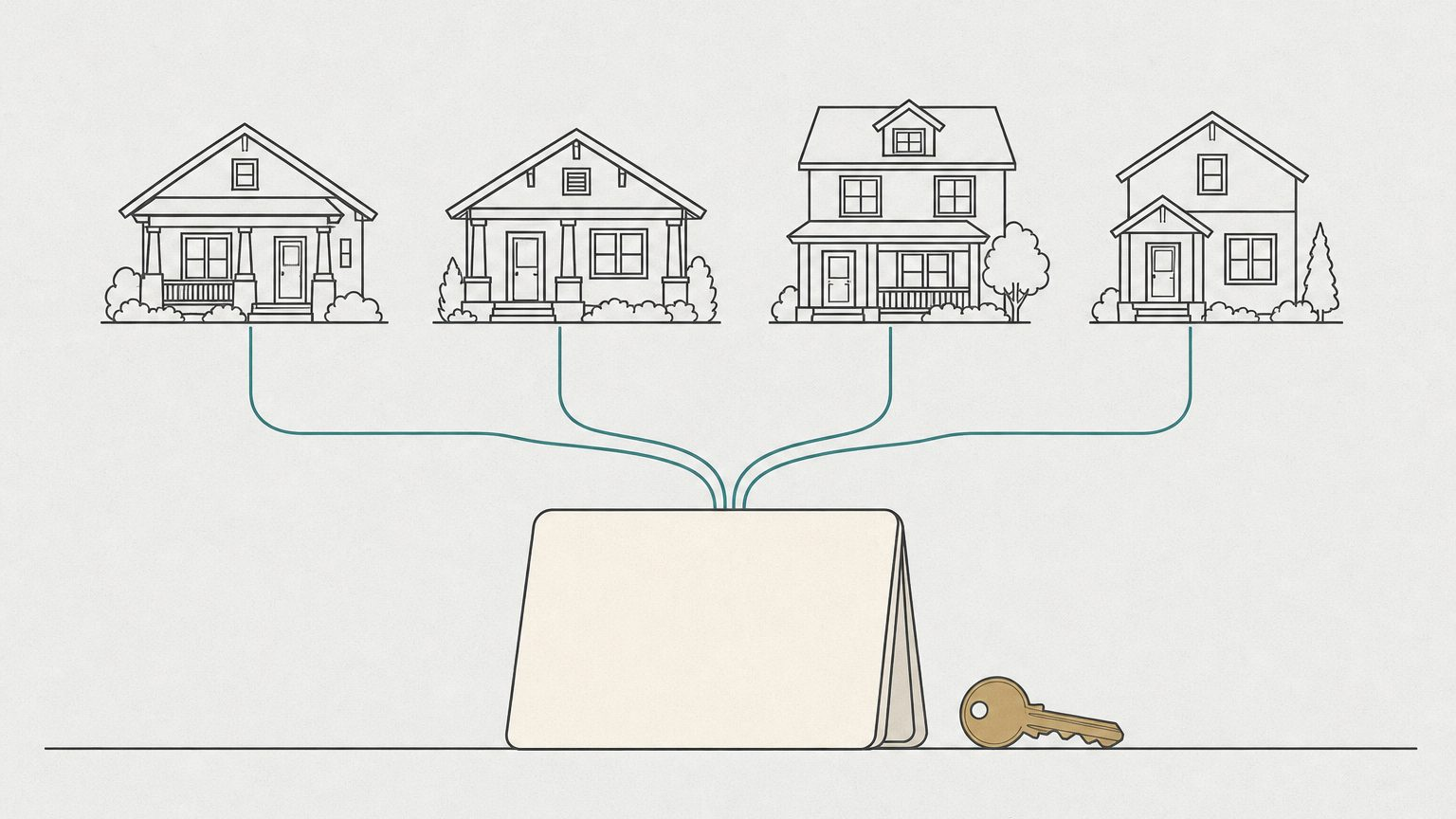
No. One operating bank account per entity (LLC) is what matters; per-property visibility comes from tagging transactions by property in your bookkeeping system, not from separate accounts. The one non-negotiable is keeping business money separate from personal. A security deposit account may be required by state law; add one if it is.
Do I need one account per property, or one per entity?
Per entity. If every property you own sits inside one LLC, one operating account for that LLC is the right structure, whether you hold two doors or twenty. If you hold properties across multiple LLCs, each LLC gets its own account, because that is the legal boundary that has to stay clean, not the property line.
This trips people up because the advice sounds backward. Landlords who care about their numbers assume more separation means more accuracy. In practice, the account is just where cash sits between the tenant and the bill. It was never built to answer “which property does this belong to,” and asking it to do that job is where the trouble starts.
What actually has to stay separate?
Business money from personal money. That is the boundary that protects your liability shield, keeps your books honest, and is the difference an insurer, a lender, or a court actually cares about. Rent deposits into a personal account, or a landlord’s grocery run paid from the LLC’s card, is commingling, and it is the mistake that undoes the protection an LLC is supposed to provide. We cover the most common versions of this in 7 Bookkeeping Mistakes Landlords Make.
“The account draws the legal line between you and the business. The property line lives inside your books, not inside the bank.”
Property-level separation is a different question entirely, and it is a reporting question, not a legal one. You can answer it without opening a new account for every door.
When does an extra account make sense?
A couple of situations justify a second account beyond the one operating account per entity:
- Security deposits, where state law requires it. Several states require tenant security deposits to sit in a separate, sometimes interest-bearing, account, held apart from operating cash. If your state requires this, open the account; it is a compliance requirement, not a bookkeeping preference. Full treatment of the accounting side is in our security deposit article.
- A reserve or savings account. Some landlords like a second account inside the same entity to hold a maintenance or vacancy reserve, separate from day-to-day operating cash. That is a cash-management choice, not a requirement, and it still rolls up into the same entity’s books.
Neither of those is “one account per property.” Both are still entity-level decisions.
Twenty doors, twenty accounts, one headache
A landlord with twenty properties in one LLC and twenty separate operating accounts is not twenty times more organized. They are reconciling twenty statements every month, splitting every shared bill twenty ways at the bank instead of in the books, and getting zero additional reporting for the effort. The per-property number they wanted was always a filter away, not an account away.
How do I get per-property numbers without per-property accounts?
The property dimension lives on the transaction, not the account. In QuickBooks Online that is a class or location on every line; in Stessa, it is the property assigned to the transaction when you categorize it. Tag consistently and any report can be filtered down to one property in seconds, which is the same result twenty bank accounts were trying to buy at a much higher cost. Our rental property chart of accounts article covers the account structure that pairs with this tagging.
As an example: say a landlord holds four single-family rentals in one LLC, one operating account. A roof repair bill for $2,400 lands as one transaction, tagged to the property it serves. A landlord insurance bill covering all four properties for $3,600 gets split four ways at $900 each and tagged accordingly. At month end, filtering the books by property gives a clean P&L for each of the four doors, out of a single bank feed. Nothing about that report needed a second account.
We walk through the full method, including how to handle the shared bills, in How Do I Get a P&L Per Property When Everything Runs Through One Account?
The Bottom Line
Open one operating account per entity, not per property. Keep business and personal money strictly separate, add a segregated account only where the law requires it (security deposits) or cash management genuinely calls for it (a reserve), and get your per-property visibility from consistent tagging in your bookkeeping system instead. That structure scales to any door count without multiplying your reconciliation work.
Frequently asked questions
Does my LLC protection require a separate bank account per property?
No. LLC liability protection depends on keeping the entity’s money separate from your personal money, and on respecting the entity as a distinct legal person in how you run it. It does not depend on isolating each property inside its own account. Multiple properties can share one entity account as long as business and personal funds never mix.
I already have a bank account per property. Should I consolidate them?
It is worth considering if the accounts add reconciliation work without adding reporting value, which is common once you also tag transactions by property in your books. Consolidating is a deliberate move though: talk to your bank about the mechanics and confirm with your CPA that it will not complicate a year already in progress before you close anything.
Do I need a separate account for each LLC if I have multiple entities?
Yes. That is the boundary that actually matters. Each LLC needs its own operating account so its books, its liability shield, and its tax filing stay distinct from your other entities. Mixing funds across LLCs is a form of commingling even when every property involved is a rental you own.
Keep reading
More articles on landlord bookkeeping from Real Cents Organized.



Ready to hand off your books?
Book a free 20-minute call. We will scope your portfolio and show you exactly how we would clean it up.
Schedule a Free Call →