Capital Improvement vs. Repair: The IRS Test
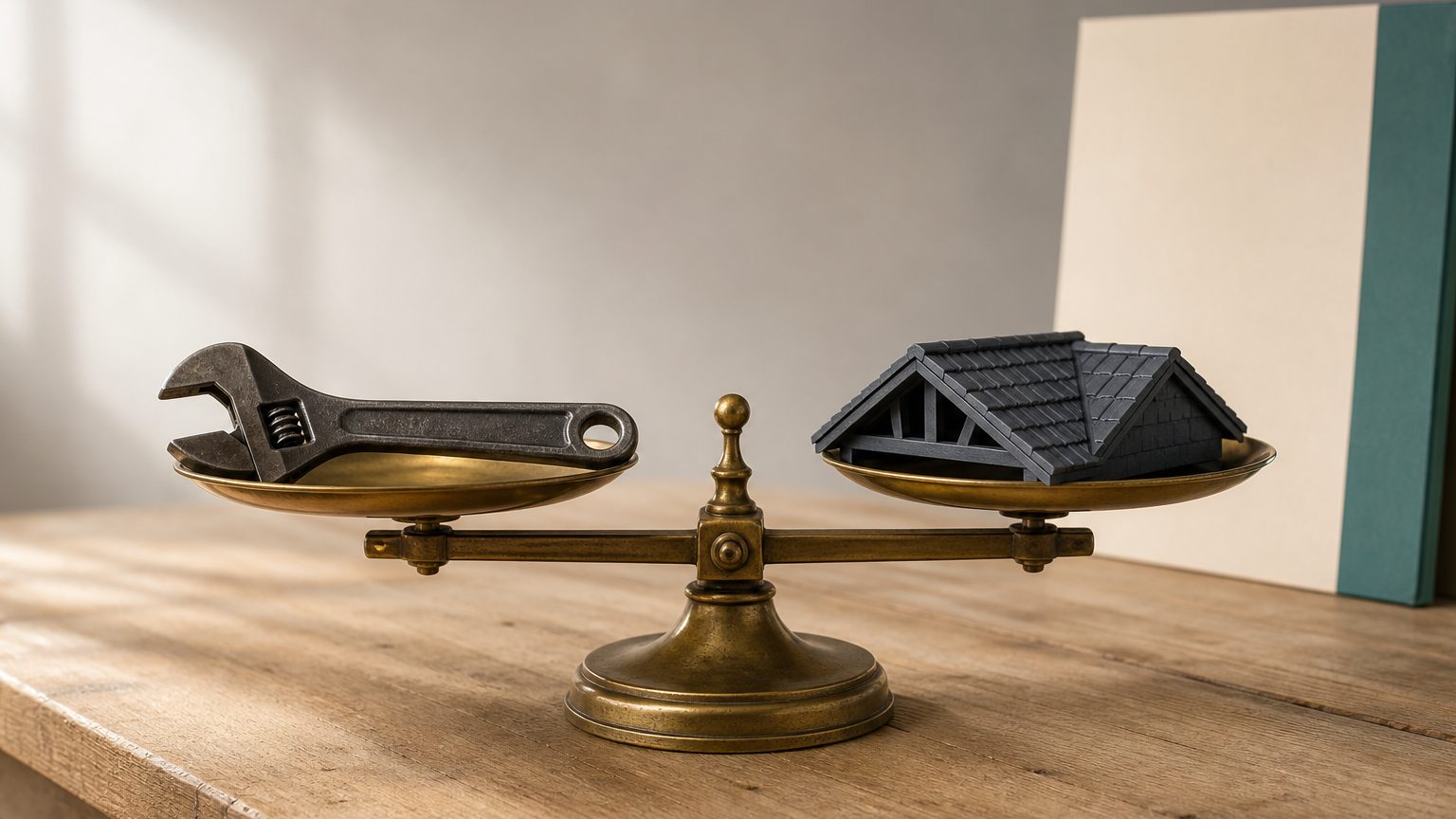
If the work makes the property better, restores a major component, or adapts it to a new use, it is a capital improvement and is depreciated, roughly 27.5 years for residential rentals. If it only keeps the property in ordinary operating condition, it is a repair you deduct this year.
A repair is deducted in full this year. A capital improvement is depreciated over as long as 27.5 years. Same dollar amount, radically different tax outcome. Here is the plain-English version of how the IRS draws the line.
Why does the repair vs. improvement call matter?
Spend $8,000 fixing up a rental and the tax treatment depends entirely on what the work was. If it qualifies as a repair, you deduct $8,000 against this year’s rental income. If it is a capital improvement on a residential rental, you deduct roughly $290 a year for 27.5 years.
Misclassify in either direction and it costs you. Call an improvement a repair and you risk an audit adjustment with penalties. Call a repair an improvement and you hand the IRS an interest-free loan for decades.
How does the IRS BRA test work?
The IRS tangible property regulations boil the question down to three words: Betterment, Restoration, Adaptation. If the work does any of these, it is a capital improvement.
- Betterment. The work makes the property meaningfully better than it was before: bigger, stronger, more capacity, higher quality. Upgrading laminate counters to granite is a betterment.
- Restoration. The work returns something to like-new condition after it has fallen into disrepair, or replaces a major component. A full roof replacement is a restoration.
- Adaptation. The work changes what the property is used for. Converting a garage into a rentable studio is an adaptation.
If the work just keeps the property in ordinary operating condition without doing any of those three things, it is a repair: deduct it now.
“Ask one question first: did the work fix what existed, or did it create something better, newer, or different? Fixing is a repair. Better, newer, or different is capital.”
Which projects are repairs and which are improvements?
Usually repairs: patching a roof leak, repainting a unit between tenants, replacing a broken garbage disposal, fixing a section of fence, swapping a cracked window pane, snaking a drain.
Usually capital improvements: replacing the entire roof, a kitchen or bath remodel, new HVAC system, whole-house repipe or rewire, an addition, new flooring throughout, converting the use of a space.
Replacing part of a system
Replacing one failed AC condenser in a building with four separate units leans repair. Replacing the only HVAC system the property has is a restoration of a major component, which leans capital. Scope relative to the whole system is what matters, and this is exactly the kind of call worth confirming with your CPA.
Which safe harbors let landlords deduct now?
- De minimis safe harbor. Items costing $2,500 or less per invoice (or per item as substantiated on the invoice) can generally be expensed outright, even if they would otherwise look capital.
- Small taxpayer safe harbor. If a building’s unadjusted basis is $1 million or less, you may expense repairs, maintenance, and improvements up to the lesser of $10,000 or 2% of the building’s basis per year.
- Routine maintenance safe harbor. Work you reasonably expect to perform more than once every 10 years (for buildings) to keep property in ordinary operating condition can be treated as a deductible repair.
These elections have requirements and paperwork. We are bookkeepers, not tax advisors, so confirm the elections with your CPA. What we do is make sure every invoice is categorized and documented so your CPA can actually use them.
Is your repairs account hiding capital projects?
Misclassified renovations are one of the most common findings in our cleanup projects. We sort it out, document it, and hand your CPA clean numbers.
See our Catch-Up & Cleanup service →The Bottom Line
Every renovation invoice should be classified when it happens, not reconstructed in March. Record what the work was, which property it touched, and whether it fixed something or made something better. That one habit turns the repairs-vs-capital question from an audit risk into a five-minute conversation with your CPA.
Frequently asked questions
Is a new roof a repair or a capital improvement?
A full roof replacement is a capital improvement: it restores a major component, so it is depreciated rather than deducted at once. Patching a leak or replacing a few damaged shingles keeps the roof in operating condition and is ordinarily a repair, deductible this year.
Is repainting a rental a repair?
Repainting between tenants is ordinarily a repair, deductible in the year you pay for it. If the painting happens as part of a larger remodel, it gets folded into the capital project and depreciated with it. The surrounding scope of work decides.
What is the de minimis safe harbor?
An IRS safe harbor that lets you expense items costing $2,500 or less per invoice or item instead of capitalizing them, provided the election is made on your return. It is one of three safe harbors useful to landlords. Whether and how to elect it is a call for your CPA.
Who makes the final repair vs. improvement call?
Your bookkeeper should classify consistently during the year and flag gray areas. The final position on the return belongs to your CPA, who weighs the BRA test, safe harbors, and your overall situation. Clean, consistently classified books are what make that conversation fast.
Keep reading
More articles on landlord bookkeeping from Real Cents Organized.


Ready to hand off your books?
Book a free 20-minute call. We will scope your portfolio and show you exactly how we would clean it up.
Schedule a Free Call →